Moldeo por inyección de PEEK
- Inicio
-  / Material / 
- Moldeo por inyección de PEEK
PEEK Injection Moulding: Mastering High-Performance Polymer Processing
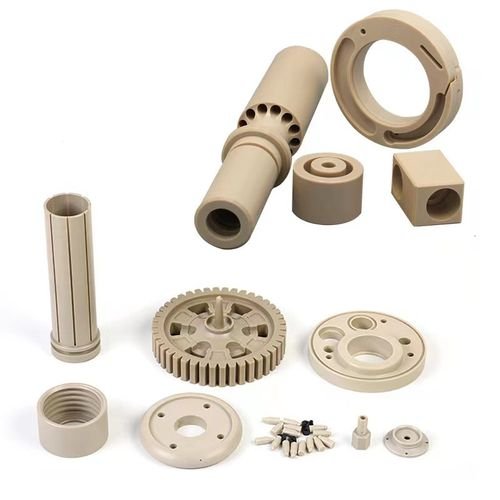
1. Introduction: The Pinnacle of Engineering Plastics
Polyether ether ketone (PEEK) represents the apex of high-performance thermoplastics, combining exceptional mechanical properties, thermal stability, and chemical resistance in ways that no other polymer can match. First commercialized in the 1980s, this semi-crystalline super-engineering polymer has become indispensable in applications where failure is not an option – from deep-sea oil exploration to aerospace propulsion systems and life-sustaining medical implants. With its ability to withstand continuous service temperatures up to 260°C (500°F) while maintaining structural integrity, PEEK injection moulding stands as one of the most demanding and technically sophisticated manufacturing processes in the polymer industry.
This comprehensive guide explores the intricate world of PEEK injection moulding, examining the material’s unique characteristics, specialized processing requirements, and the exacting standards necessary to produce components that routinely operate in extreme environments. We will uncover why PEEK commands premium pricing yet delivers unparalleled value in critical applications, and how advances in processing technology continue to expand its boundaries in demanding sectors.
2. Material Science: Understanding PEEK’s Exceptional Properties
Chemical Architecture:
PEEK belongs to the PAEK (polyaryletherketone) family, characterized by an alternating structure of aromatic rings connected by ketone and ether functional groups. This molecular architecture provides:
Key Structural Features:
Aromatic Backbone: Provides thermal stability and rigidity
Ketone Groups: Contribute to high temperature resistance
Ether Linkages: Offer some chain flexibility
Crystalline Structure: 30-35% crystallinity typical in molded parts
Material Grades and Modifications:
| Tipo de Calificación | Características clave | Typical Applications |
|---|---|---|
| Virgin PEEK | Unfilled, natural color | Medical implants, semiconductor |
| 30% Glass-Filled | Enhanced stiffness, dimensional stability | Structural components, bearings |
| 30% Carbon-Filled | Superior strength, conductivity | Aerospace, automotive racing |
| PTFE-Filled | Reduced friction, wear resistance | Bushings, seals, bearings |
| Carbon Fiber Reinforced | Highest strength-to-weight ratio | Aerospace structures |
| Grado Médico | ISO 10993, USP Class VI compliant | Spinal implants, dental components |
Exceptional Property Matrix:
| Propiedad | Value Range | Comparison Advantage |
|---|---|---|
| Continuous Service Temp | 260°C (500°F) | Highest among thermoplastics |
| Tensile Strength | 90-100 MPa (unfilled) | Comparable to aluminum |
| Flexural Modulus | 3.6-4.0 GPa (unfilled) | Stiff engineering performance |
| HDT @ 1.82 MPa | 160°C (320°F) | Unmatched for thermoplastics |
| Resistencia química | Excellent | Withstands most chemicals |
| Wear Resistance | Excellent | Superior to many metals |
| Flame Rating | UL94 V-0 | Self-extinguishing |
| Radiation Resistance | Excellent | Medical sterilization compatible |
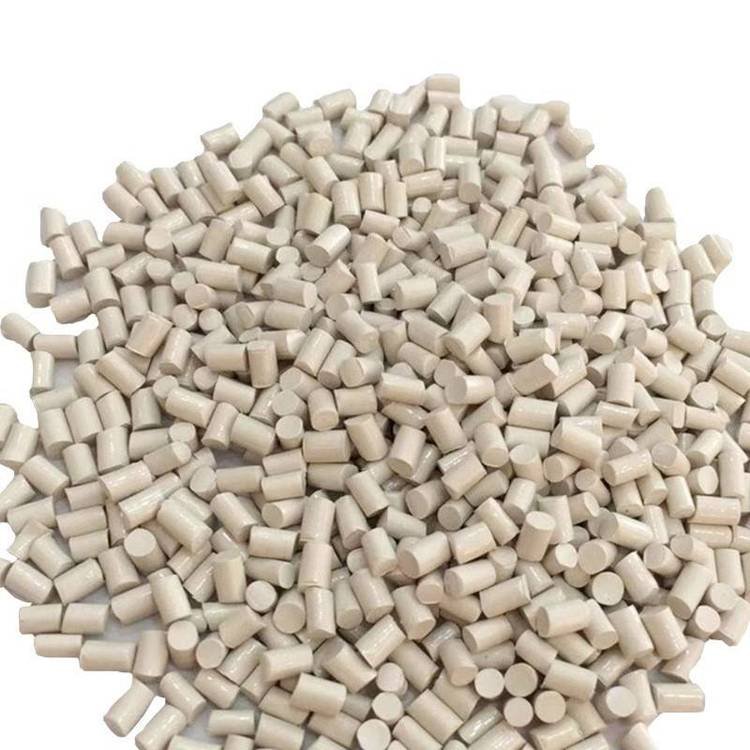
3. Preparación de Materiales: La Fase Crítica de Preprocesamiento
Extreme Drying Imperatives:
PEEK is highly hygroscopic with moisture absorption up to 0.5% at equilibrium. Improper drying causes catastrophic defects:
Especificaciones de secado:
Humedad objetivo: <0.02% (200 ppm) for critical applications
Temperatura de secado: 150°C (302°F) minimum, 180°C (356°F) optimal
Tiempo de secado: 4-6 hours minimum, 8+ hours recommended
Punto de rocío: -40°C (-40°F) or lower mandatory
Diseño de tolvas: Closed-loop drying with sufficient residence time
Consecuencias de un secado insuficiente:
Hydrolytic Degradation: Water causes chain scission at high temperatures
Surface Defects: Severe splay, silver streaks, bubbles
Property Loss: Dramatic reduction in mechanical properties
Molecular Weight Drop: Irreversible damage to polymer chains
Processing Issues: Inconsistent flow, poor dimensional control
Material Handling Protocol:
Storage Environment: 23°C ±2°C, <30% relative humidity
Controlled Access: Limit exposure to ambient air
Container Management: Sealed with desiccant when not in use
Time Limits: Maximum 1-2 hours exposure during material changes
Regrind Management Strategy:
Reinicio Máximo: 10-15% for critical applications
Rastreo de Historial Térmico: Each cycle degrades properties
Procesamiento Separado: Dedicated equipment recommended
Testing Protocol: Regular melt flow and mechanical testing
Integración del Colorante:
Limited Options: High processing temperatures restrict choices
Special Masterbatches: PEEK-compatible carriers required
Pre-compounded: Recommended for consistent results
Natural Preference: Many applications use natural color
4. Requisitos de la máquina de moldeo por inyección
Premium Machine Specifications:
Temperature Capability:
Maximum Required: 400°C (752°F) minimum capability
Control de temperatura: ±1°C precision throughout system
Zonas de Calefacción: Minimum 5-6 zones with PID control
Bandas calefactoras: High-quality with uniform distribution
Insulation: Comprehensive to minimize heat loss
Screw Design Excellence:
Material: High-grade corrosion-resistant steel
Relación L/D: 20:1 to 24:1 for proper melting
Relación de compresión: 2.5:1 to 3.0:1
Válvula antirretorno: High-performance sliding ring type
Punta de tornillo: Mixing elements for filled grades
Tratamiento de Superficie: Hard chrome or nitrided for wear resistance
Barrel and Nozzle System:
Barrel Material: Bimetallic with corrosion-resistant lining
Capacity: 40-70% (potencia nominal óptima de la máquina)
Tipo de boquilla: Open with precise temperature control
Thermocouples: Multiple for accurate temperature mapping
Wear Monitoring: Regular inspection and measurement
Sistema de sujeción:
Fuerza de sujeción: 4-8 tons per square inch (higher for filled grades)
Paralelismo de platen: Critical for precision parts
Tie Bar Strength: Adequate for high injection pressures
Sistema de eyección: Precise, controlled ejection essential
Requisitos del Sistema de Control:
Control de bucle cerrado: For all critical parameters
Registro de datos: Complete process documentation
Recipe Management: Multiple optimized parameter sets
Integración: With all auxiliary equipment
Auxiliary Equipment:
High-Temperature Dryers: Capable of 180°C operation
Precision Chillers: For mold temperature control
Robotic Systems: For part handling and quality assurance
Environmental Control: For consistent processing conditions
5. Parámetros de Procesamiento y Optimización
Critical Temperature Parameters:
| Process Zone | Rango de temperatura | Critical Notes |
|---|---|---|
| Rear Barrel | 340-360°C (644-680°F) | Gentle preheating |
| Middle Zones | 360-380°C (680-716°F) | Main melting phase |
| Front Zone | 380-400°C (716-752°F) | Final homogenization |
| Nozzle | 380-400°C (716-752°F) | Match melt temperature |
| Temperatura de fusión | 380-400°C (716-752°F) | Critical for crystallization |
| Temperatura del molde | 160-200°C (320-392°F) | Essential for properties |
Temperature Management Principles:
Temperatura mínima: Below 360°C risks incomplete melting
Temperatura máxima: Above 420°C causes degradation
Thermal Uniformity: ±5°C maximum variation in melt
Residence Time: Minimize to prevent thermal degradation
Optimización de la fase de inyección:
Velocidad de inyección:
Fast to very fast injection recommended
Prevents premature freezing in mold
Maintains melt temperature through shear heating
Presión de inyección: 1000-2000 bar (higher for filled grades)
Switchover: 95-98% cavity fill by volume
Presión de retención: 10-20 bar for melt homogenization
Holding/Packing Phase Strategy:
Presión: 60-80% of injection pressure
Tiempo: Extended (15-30 seconds typical)
Función: Compensates for high shrinkage (1.2-2.0%)
Multi-StageA menudo beneficioso para piezas complejas
Cooling and Crystallization Control:
Tiempo de enfriamiento: 60-120 seconds per mm thickness
Mold Temperature Critical: Controls crystallization rate and degree
Temperatura de eyección: Below 200°C to prevent distortion
Annealing: Often required for optimal properties
Técnicas de Procesamiento Especial
High-Speed Injection: For thin-walled parts
Gas-Assist Moulding: For thick sections
Sequential Gating: For large or complex parts
In-Mould Crystallization: Controlled cooling profiles
6. Tooling Design for PEEK Moulding
Premium Mold Materials:
Cavity/Core: Tool steels H13, S7, or stainless steels
Hardness Requirements48-52 HRC mínimo
Resistencia a la corrosión: Essential for consistent performance
Surface Treatments: Nitriding, chrome plating, or PVD coatings
Conductividad térmica: Se prefieren materiales de alta conductividad
Diseño del sistema de corredores
Corredores de ronda completa: 8-12mm diameter minimum
Runner Balancing: Critical for multi-cavity molds
Sistemas de Canal Caliente: Externally heated with precise control
Tipos de Puertas:
Puertas de borde: Most common
Direct Sprue: For single-cavity molds
Compuertas de diafragma: For cylindrical parts
Consejos candentesPara superficies cosméticas
Temperature Control System:
High-Temperature Capability: Up to 200°C operation
Enfriamiento ConformeLe sigue de cerca los contornos de la pieza
Multiple Circuits: Separate control for different zones
Uniformidad de temperatura: ±3°C across mold surface
Heated Manifolds: For consistent temperature distribution
Diseño del sistema de ventilación:
Profundidad de ventilación: 0.010-0.020mm (shallower than many materials)
Ancho de ventilación6-10mm
Strategic Placement: All end-of-fill areas
Vacuum Venting: Recommended for critical parts
Regular Maintenance: Essential for consistent performance
Ejection System Considerations:
Pasadores expulsoresDiámetro más grande para reducir la presión superficial
Material Selection: High-temperature resistant steels
Acabado superficial: Highly polished to prevent sticking
Ejection Force: Higher due to high stiffness
Sequenced Ejection: For complex geometries
Surface Finish Requirements:
Optical Quality: SPI A-1 for medical and optical parts
Texture Options: Available but affects crystallization
Dirección polaca: Consistent to avoid visual defects
Maintenance: Regular polishing to maintain quality
7. Crystallinity Control and Annealing Processes
Understanding PEEK Crystallinity:
Crystalline Content: Typically 30-35% in as-molded parts
Crystallization Temperature: 170-190°C (338-374°F)
Crystal Structure: Orthorhombic unit cells
Property Dependence: Mechanical properties directly related to crystallinity
Factors Affecting Crystallinity:
| Factor | Effect on Crystallinity | Control de Procesos |
|---|---|---|
| Temperatura del molde | Higher temp = higher crystallinity | Precise temperature control |
| Cooling Rate | Slower cooling = higher crystallinity | Controlled cooling profiles |
| Nucleating Agents | Increase crystallization rate | Material formulation |
| Peso Molecular | Lower MW = higher crystallinity | Material grade selection |
| Part Thickness | Thicker = higher crystallinity | Design consideration |
Annealing Processes:
Purpose: Increase crystallinity, relieve stresses, improve properties
Temperature: 200-220°C (392-428°F) for 2-4 hours
Atmosphere: Inert gas or vacuum to prevent oxidation
Cooling Rate: Controlled (1-2°C per minute) to room temperature
Beneficios: Increased HDT, improved chemical resistance, dimensional stability
Crystallinity Measurement Methods:
DSC (Differential Scanning Calorimetry): Most common method
XRD (X-ray Diffraction): For crystal structure analysis
Density Measurement: Indirect method using density-crystallinity relationship
FTIR Spectroscopy: For chemical structure analysis
Processing for Optimal Crystallinity:
Temperatura del molde: Maintain above 160°C for adequate crystallization
Holding Pressure: Sufficient to pack crystals during solidification
Cooling Rate: Controlled to allow proper crystal growth
Post-Mould Annealing: For maximum properties
8. Part Design Guidelines for PEEK
Principios de Espesor de Pared:
Rango General: 1.0-6.0mm
Espesor óptimo: 2.0-3.0mm
Unidad: Critical (maximum 20% variation)
Espesor mínimo: 0.5mm possible with optimized processing
Secciones Gruesas: Core out to minimize sink marks and reduce stress
Radii and Corner Design:
Radios internosMínimo 0.5 veces el espesor de la pared
Radios externosRadio interno más espesor de pared
Concentración de Esfuerzo: Avoid sharp corners completely
Transition Design: Gradual changes (3:1 maximum ratio)
Diseño de Costilla y Nervio
Grosor de la costilla: 40-50% of adjacent wall
Altura de la costillaMáximo 2,5 veces el espesor de la pared
Diseño de Jefe: Must be cored and connected with ribs
Ángulos de borrador: 1-2° per side minimum
Fillet Radii: Generous at base connections
Draft Angle Requirements:
Standard Applications: 1-3° per side
High-Aspect Features: Additional draft may be required
Textured Surfaces: Add 1° per 0.025mm texture depth
Medical Implants: Minimum draft for precise fits
Tolerance Considerations:
Standard Tolerances: ±0.1% or ±0.1mm, whichever is greater
Critical Dimensions: ±0.05% achievable with optimization
Expansión Térmica: Account for 4.7 x 10^-5 /°C
Post-Mould Changes: Minimal due to high stiffness
Assembly Feature Design:
Snap-fits: Limited use due to high stiffness
Hilos: Molded-in possible with proper design
Press-fitsCálculos de interferencia cuidadosos requeridos
Vínculo: Designed for specialized adhesives
Mechanical Fastening: Preferred method for most applications
9. Quality Control and Testing Protocols
Material Qualification Testing:
Análisis Térmico:
Análisis DSC: Melting point (343°C), crystallinity percentage
TGA: Thermal stability, decomposition temperature
DMA: Dynamic mechanical properties
HDT/Vicat: Heat deflection and softening points
Pruebas mecánicas:
Propiedades de tracción: ASTM D638 at elevated temperatures
Pruebas de flexión: ASTM D790 for stiffness verification
Resistencia al impactoASTM D256 (Izod/Charpy)
Compressive Strength: ASTM D695 for structural applications
Chemical and Environmental:
Resistencia químicaPruebas de inmersión según ASTM D543
Hydrolytic Stability: Autoclave testing for medical parts
Radiation Resistance: Gamma sterilization compatibility
Aging Studies: Long-term property retention
Process Control Parameters:
Temperatura de fusión: Continuous infrared monitoring
Pressure Profiles: Injection and holding phase documentation
Consistencia del cojín: ±0.2mm variation maximum
Tiempo de cicloImplementación del control estadístico de procesos
Part Validation Testing:
Dimensional Verification: CMM with temperature compensation
Calidad de la superficie: White light interferometry for critical parts
Non-destructive Testing: Ultrasonic or X-ray for internal defects
Functional Testing: Under application conditions
Certification and Documentation:
Material Traceability: Lot tracking from resin to finished part
Process Documentation: Complete parameter records
Certificaciones de Calidad: ISO 13485, AS9100, etc.
Customer-Specific Requirements: Often exceed industry standards
10. Industry Applications and Case Studies
Aeroespacial y de Defensa:
Aircraft Components: Brackets, clips, fasteners (25% weight savings vs metal)
Engine Components: Seals, bushings, wear pads
Interior Components: Meeting FAA flammability requirements
Space Applications: Radiation-resistant components
Medical Technology:
Orthopedic Implants: Spinal cages, joint replacements
Dental Instruments: Autoclavable handles and components
Surgical Tools: Lightweight, MRI-compatible instruments
Administración de fármacos: Components for infusion pumps
Oil and Gas Industry:
Downhole Components: Seals, bushings, wear rings
Subsea Equipment: Electrical connectors, sensor housings
Valve Components: Seats, seals, guiding elements
Chemical Processing: Pump components, valve parts
Semiconductor Manufacturing:
Wafer Handling: Carriers, end effectors
Process Chamber: Components for plasma environments
Chemical Delivery: Valves, fittings, tubing
Clean Room Equipment: Low particle generation components
Automotive Racing:
Engine Components: Seals, bushings, bearings
Transmission Parts: Wear components, seals
Suspension Components: Bushings, bearings
Electrical Systems: Connectors, sensor housings
Industrial Applications:
Bearings and Bushings: For high-temperature environments
Seals and Gaskets: Chemical and temperature resistance
Electrical Insulation: For high-temperature applications
Wear Components: Superior to many metals
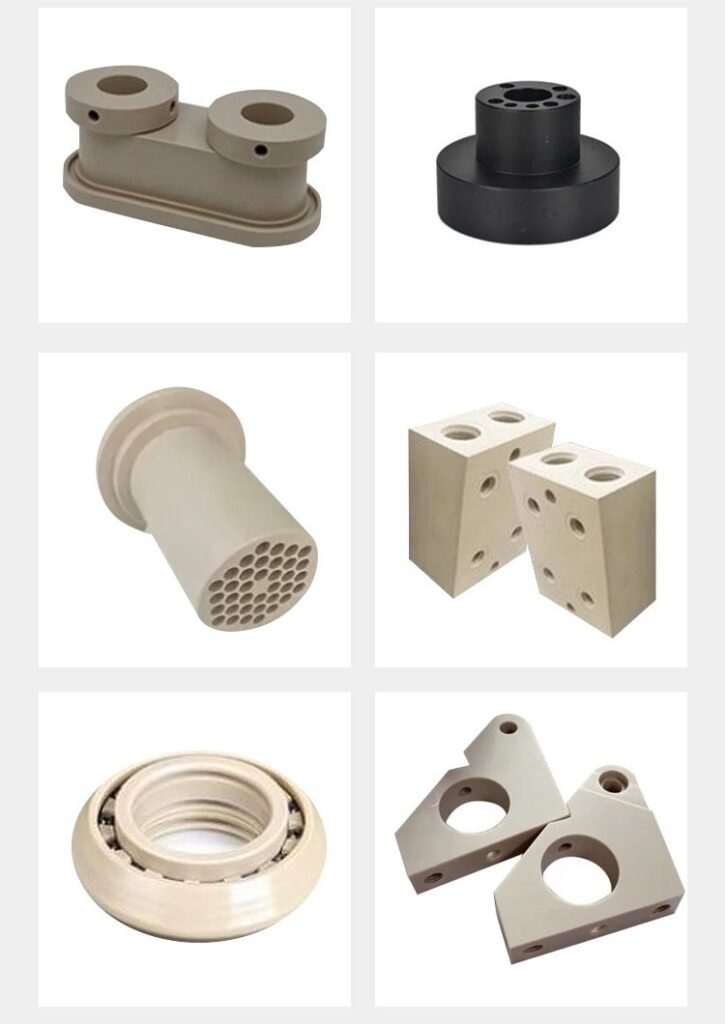
11. Troubleshooting Common PEEK Defects
| Defecto | Causas Raíz | Acciones Correctivas | Prevention Strategies |
|---|---|---|---|
| Surface Delamination | Moisture contamination, overheating | Verify drying, reduce temperatures | Strict moisture control, temp monitoring |
| Burbujas/Vacíos | Moisture, insufficient packing | Improve drying, increase pack pressure/time | Proper material handling, process optimization |
| Poor Crystallinity | Low mold temperature, fast cooling | Increase mold temp, adjust cooling rate | Proper mold temperature control |
| Warpage/Distortion | Non-uniform cooling, residual stress | Improve cooling uniformity, annealing | Balanced cooling design, post-mould treatment |
| Short Shots | Low temperature, inadequate pressure | Increase temps 10-20°C, increase pressure | Proper temperature settings, gate optimization |
| Sink Marks | Insufficient packing, thick sections | Increase holding pressure/time, modify design | Uniform wall design, adequate packing |
| Discoloration | Thermal degradation, excessive residence | Lower temperatures, reduce cycle time | Temperature control, optimized cycles |
| Poor Dimensional Stability | Inconsistent processing, improper annealing | Standardize process, implement annealing | Process control, post-mould treatments |
Material-Specific Challenges:
Degradación térmica: Above 420°C causes permanent damage
Crystallinity Control: Critical for consistent properties
Moisture Sensitivity: Extreme sensitivity requires rigorous control
High Shrinkage: Requires precise mold design compensation
Preventive Quality Measures:
Regular Equipment Calibration: Temperature sensors, pressure transducers
Pruebas de Materiales: Incoming material qualification
Process Validation: DOE studies for parameter optimization
Continuous Monitoring: Real-time parameter tracking
12. Sustainability and Recycling Considerations
Recycling Challenges and Opportunities:
Mechanical Recycling:
Property Retention: Good with limited thermal history
Reinicio Máximo: 10-15% for critical applications
Sorting Requirements: Must be separated from other polymers
Aplicaciones: Lower-grade applications possible
Chemical Recycling:
Depolymerization: Back to monomer possible but complex
Solvent Recovery: For certain applications
Pyrolysis: To chemical feedstocks
Current Status: Developing but not commercial scale
Energy Recovery:
Valor calorífico: 32-34 MJ/kg (higher than many polymers)
Valorización energética de residuos: Efficient option for contaminated material
Environmental Considerations: Halogen-free combustion
Iniciativas de Fabricación Sostenible:
Eficiencia Energética: Optimized processing reduces energy consumption
Optimización de materiales: Minimal waste through design
Extended Product Life: Long service life reduces environmental impact
Lightweighting: Replacing metals reduces energy in use phase
Industry Programs and Certifications:
Environmental Management: ISO 14001 implementation
Material Stewardship: Responsible sourcing and use
Análisis de Ciclo de VidaAnálisis ambiental integral
Industry Collaboration: Across value chain for sustainability
13. Future Trends and Innovations
Avances en Ciencia de Materiales:
Enhanced Grades: Higher temperature resistance, improved flow
Bio-based PEEK: From renewable monomers (developing)
Nanocomposites: Enhanced properties at lower loadings
Smart PEEK: Functional additives for specific properties
Evolución de la Tecnología de Procesamiento:
Integración Industria 4.0: AI-driven process optimization
Additive Manufacturing: 3D printing with PEEK filaments
Micro-moulding: For medical micro-devices
Procesos Híbridos: Combining different manufacturing methods
Application Expansion:
Additive Manufacturing: Custom medical implants, complex aerospace parts
Electric Vehicles: High-temperature electrical components
Energía Renovable: Components for extreme environments
Advanced Medical: Bioactive implants, drug delivery systems
Innovaciones Sostenibles:
Reciclaje Mejorado: Better separation and recovery technologies
Circular Economy: Closed-loop material systems
Carbon Footprint Reduction: Throughout product lifecycle
Sustainable Formulations: Reduced environmental impact
Market and Regulatory Trends:
Cost Reduction: Through improved manufacturing efficiency
Standardization: Global standards for high-performance polymers
Regulatory Compliance: Evolving requirements for medical and aerospace
Supply Chain Optimization: For consistent quality and availability
14. Conclusion: Mastering High-Performance Polymer Processing
PEEK injection moulding represents the pinnacle of polymer processing technology, demanding:
Material Mastery: Deep understanding of PEEK’s unique characteristics
Process Excellence: Precise control of all parameters
Equipment Capability: Specialized machinery and tooling
Compromiso de calidad: Uncompromising standards for critical applications
Technical Expertise: Continuous learning and improvement
The future of PEEK processing lies in expanding its capabilities while improving accessibility and sustainability. Through material innovations, processing advancements, and application development, PEEK will continue to enable solutions for the world’s most challenging engineering problems.
For manufacturers, PEEK offers opportunities to participate in high-value markets with demanding requirements. The barriers to entry are significant – requiring investment in specialized equipment, technical expertise, and quality systems. However, the rewards – in terms of market positioning, technical capability, and customer relationships – justify the investment.
As technology advances and new applications emerge, those who have mastered PEEK processing will be best positioned to lead in advanced manufacturing. The journey is challenging, but the destination – producing components that operate reliably in extreme environments and enable technological advancement – is worth the effort.