Production area
- Home
- / Home /
- Production area
Samgo Injection Molding Production: Precision, Process, and Performance
At Samgo, injection molding is not merely a manufacturing process—it is a meticulously engineered system where science, technology, and disciplined execution converge to produce plastic components of uncompromising quality, consistency, and value. Our production philosophy is built on a seamless, two-phase flow: Precision Material Preparation and Controlled Production Execution. This end-to-end control, from raw material to finished part, ensures reliability, efficiency, and total traceability for our customers. This document provides a comprehensive overview of our production floor’s core operations.
1. Production Philosophy: The Samgo Advantage
Our approach is governed by three fundamental principles that permeate every stage of production:
Process Control: We believe quality is built into the process, not inspected in afterwards. Every parameter is monitored, documented, and controlled within strict windows.
Flow Efficiency: A streamlined, logical material and information flow minimizes waste (Muda), reduces handling, and ensures on-time delivery.
Data-Driven Optimization: Real-time machine data and statistical process control (SPC) guide our decisions, enabling proactive adjustments and continuous improvement (Kaizen).
The physical layout of our production floor mirrors this philosophy, creating a clear pathway from Material Preparation to the Production Cell.
2. Phase 1: Precision Material Preparation & Handling
The integrity of the final molded part is determined long before the mold closes. Our rigorous material preparation protocols are the critical first step in guaranteeing batch-to-batch consistency.
Subsection 2.1: Centralized Drying & Dehumidification
Process: Most engineering plastics (e.g., Nylon/PA, Polycarbonate/PC, PET) are hygroscopic, absorbing moisture from the atmosphere. This moisture vaporizes during injection, causing surface defects (splay marks) and degrading mechanical properties. We employ centralized desiccant dryers that pipe dry air (-40°C dew point or lower) to individual hopper loaders at each press.
Control: Each dryer circuit is monitored for dew point and temperature. Materials are dried for the exact time and at the precise temperature specified by the resin manufacturer, with parameters logged for each batch.
Benefit: Eliminates moisture-related defects at the source, ensures optimal material flow and viscosity, and protects our tooling from potential corrosion.
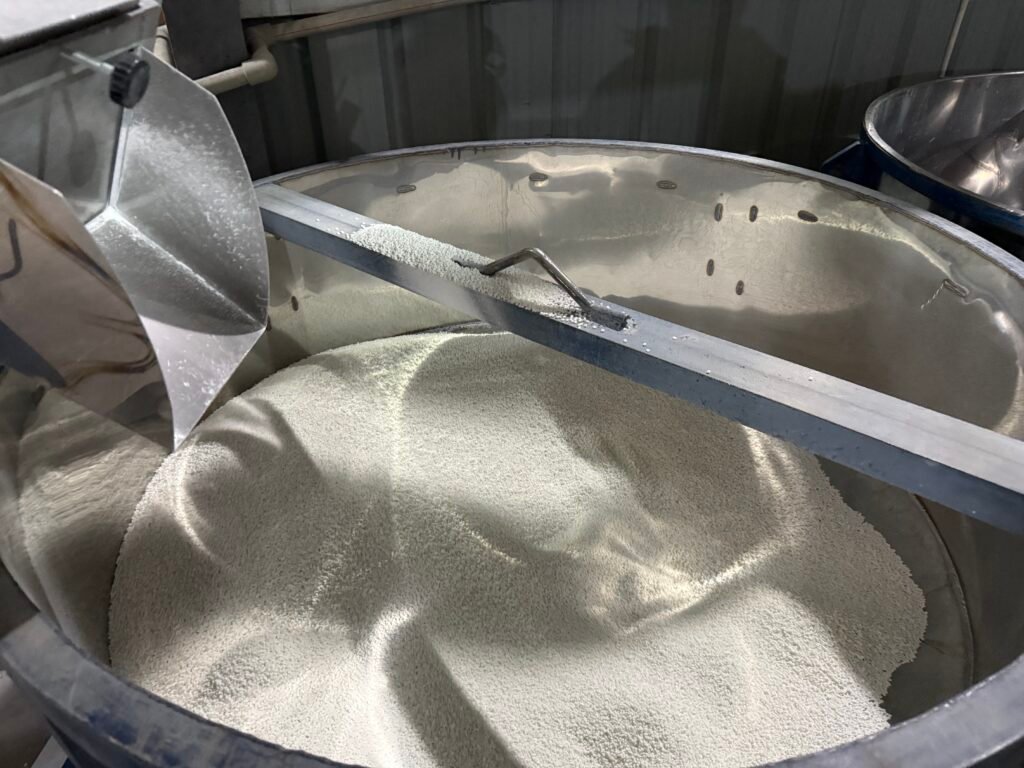
Subsection 2.2: Automated Material Conveying & Blending
Process: From the storage silos or bulk bags, resins are pneumatically conveyed to the molding machine hoppers via a closed-loop, color-coded pipe system. For applications requiring custom color or material properties, we utilize precision gravimetric or volumetric blenders mounted directly on the press.
Control: Blenders can mix virgin resin with exact percentages of regrind (from our in-house sprue/recycling system) and masterbatch colorants with accuracy within ±0.5%. Recipes are locked in the machine control system.
Benefit: Reduces manual handling (minimizing contamination risk), ensures perfect color consistency, optimizes material cost through controlled regrind use, and allows for seamless material changeovers.
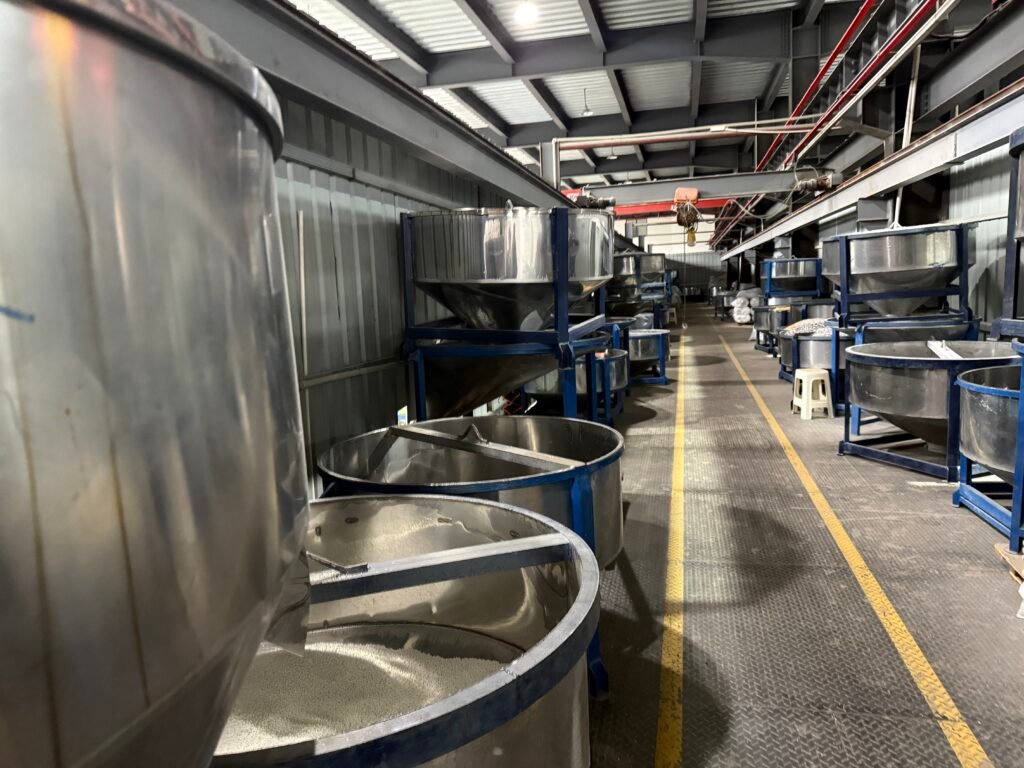
Subsection 2.3: Regrind Management & Granulation
Process: Sprues and runners produced during molding are immediately fed into closed-system granulators located beside each press or in a centralized area. The granulated material is automatically sieved to remove fines and conveyed back to the blending station for controlled reuse.
Control: The percentage of approved, clean regrind blended back into the process is strictly defined per part and material, based on rigorous testing to ensure it does not compromise critical part properties.
Benefit: Promotes a sustainable, closed-loop economy within our operation, significantly reducing raw material waste and cost while maintaining full control over material integrity.
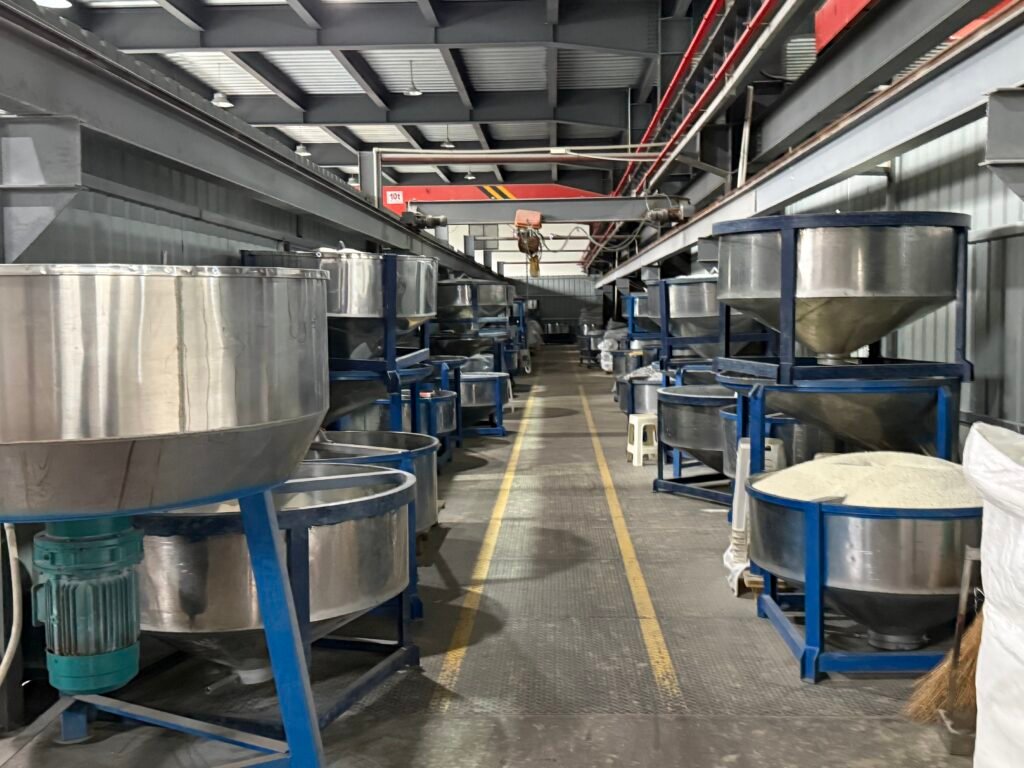
3. Phase 2: Controlled Production Execution
With material perfectly prepared, the focus shifts to the injection molding cell—a hub of integrated technology and skilled oversight.
Subsection 3.1: The Injection Molding Cell
Machinery: Our fleet consists of fully-electric and hybrid injection molding machines from leading brands (e.g., Engel, Arburg, Sumitomo), ranging from 50 to 850 tons in clamping force. Electric drives provide exceptional repeatability, speed, and energy efficiency.
Process Control: Each machine is governed by a sophisticated closed-loop control system that precisely manages injection speed and pressure, holding pressure, cooling time, and temperatures across multiple barrel and mold zones.
Tooling: High-precision molds, manufactured and maintained in our own mold shop, are mounted using standardized quick-mold-change (QMC) systems to reduce changeover time to minutes.
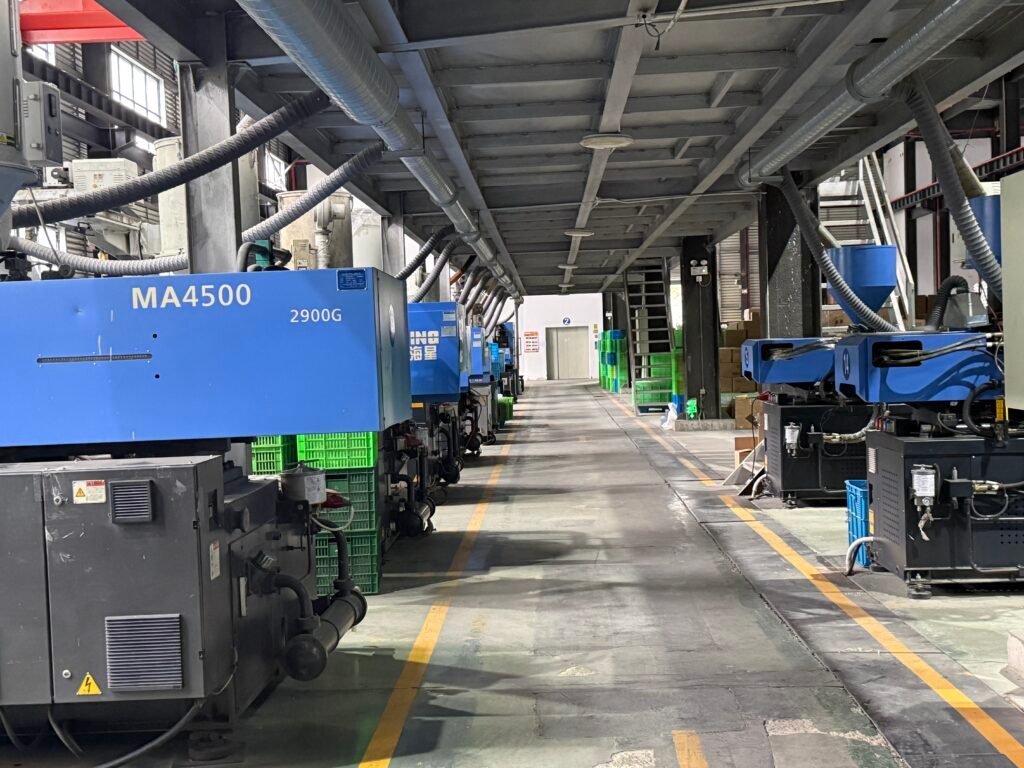
Subsection 3.2: Automated Part Handling & Quality Assurance
Robotic Integration: Every production cell is equipped with either a 3-axis servo robot or a 6-axis articulated robot. Robots perform consistent, gentle part extraction, place parts into cooling fixtures or conveyors, and insert metal components for insert molding.
In-Process Inspection: Quality is verified in real time. Robots can be equipped with vision systems to check for completeness, or parts can pass through laser gauges and vision cameras on the conveyor to measure critical dimensions. Machine process parameters are monitored via SPC software; any deviation outside set control limits triggers an automatic alarm.
Benefit: Automation ensures consistent cycle times, prevents part damage, enables complex operations, and embeds quality checks directly into the production flow, providing 100% inspection for key characteristics.
Subsection 3.3: Post-Processing & Packaging
Process: Depending on part requirements, downstream operations are seamlessly integrated. This may include:
De-gating: Automated trimming stations or manual trimming in dedicated areas.
Secondary Operations: Ultrasonic welding, heat staking, or pad printing performed at connected workstations.
Automated Packaging: Parts are counted and directed into bags, boxes, or onto custom cartons. Many lines feature automated label application.
Control: Final audit inspections are performed according to a controlled sampling plan (AQL). All packaging is clearly labeled with part number, batch/lot code, date, and quantity, ensuring full traceability.
4. The Foundation: People, Process, and Data Integration
The technology is empowered by our team and systems:
Skilled Technicians: Process technicians and setters are highly trained to monitor, adjust, and optimize the production process, responding to data trends.
Integrated Manufacturing Execution System (MES): This digital backbone connects every step. It tracks material usage, machine performance (OEE), quality data, and job status in real-time, providing a dashboard for operational excellence.
Continuous Improvement Culture: Daily meetings and cross-functional teams use production data to drive projects focused on reducing waste, improving yield, and enhancing efficiency.
5. Conclusion: A Symphony of Controlled Processes
Samgo’s injection molding production is a testament to disciplined engineering. By mastering both the science of material preparation and the controlled execution of production, we have created a robust, transparent, and highly reliable manufacturing system. This end-to-end control—from the drying hopper to the sealed shipping carton—allows us to deliver not just parts, but predictable performance, guaranteed quality, and tangible value for our partners. It is where our commitment to precision is realized, part by perfect part.