Outdoor Lighting Materials: A Complete Guide to Material Selection and Performance

Outdoor Lighting Materials: A Complete Guide to Material Selection and Performance
Introduction

Outdoor lighting products are exposed to some of the harshest environmental conditions. Unlike indoor lighting fixtures, outdoor lamps must withstand UV radiation, rain, humidity, temperature fluctuations, dust, chemicals, and mechanical impacts throughout their service life.

The selection of materials plays a critical role in determining the durability, appearance, safety, and cost of outdoor lighting products. Whether manufacturing garden lights, pathway lights, wall-mounted fixtures, floodlights, solar lamps, or landscape lighting systems, engineers must carefully evaluate the material properties before finalizing a design.

This article explores the most commonly used materials for outdoor lighting applications, their characteristics, advantages, limitations, and recommended applications.

Why Material Selection Matters in Outdoor Lighting

Outdoor lighting products face several environmental challenges:

  • Continuous UV exposure
  • Rain and moisture
  • Corrosion risks
  • Thermal expansion and contraction
  • Dust and dirt accumulation
  • Mechanical impacts
  • Salt spray in coastal regions

Poor material selection can result in:

  • Cracking
  • Fading
  • Corrosion
  • Water ingress
  • Reduced service life
  • Increased maintenance costs

Therefore, selecting the appropriate material is essential for achieving long-term reliability and product performance.


Common Materials Used in Outdoor Lighting

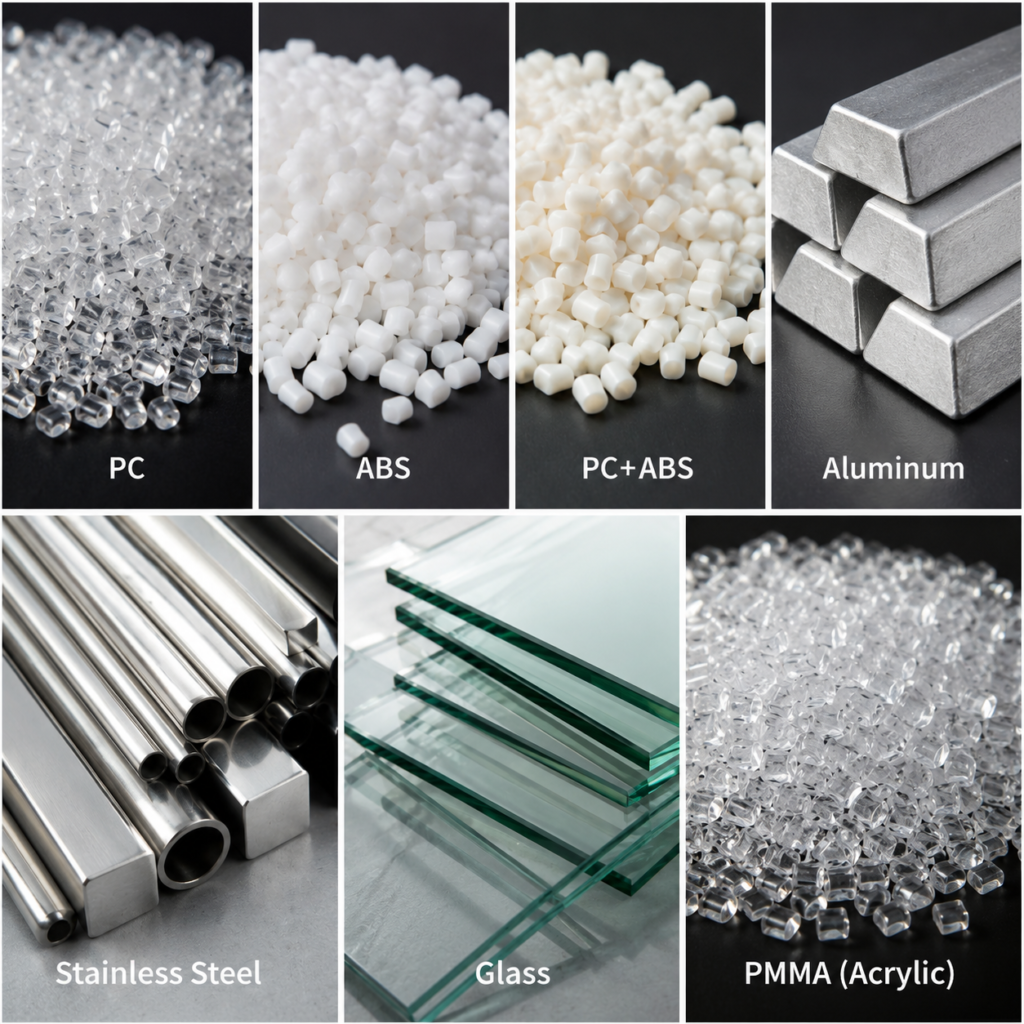
The following materials are widely used in outdoor lighting products:

MaterialUV ResistanceCorrosion ResistanceImpact StrengthCost Level
Polycarbonate (PC)ExcellentExcellentExcellentMedium
ABSModerateExcellentGoodLow
PC+ABSGoodExcellentExcellentMedium
Aluminum Die CastingExcellentExcellentHighMedium-High
Stainless SteelExcellentOutstandingHighHigh
GlassExcellentExcellentModerateMedium
PMMA (Acrylic)ExcellentExcellentModerateLow-Medium

Polycarbonate (PC): The Preferred Material for Outdoor Lighting

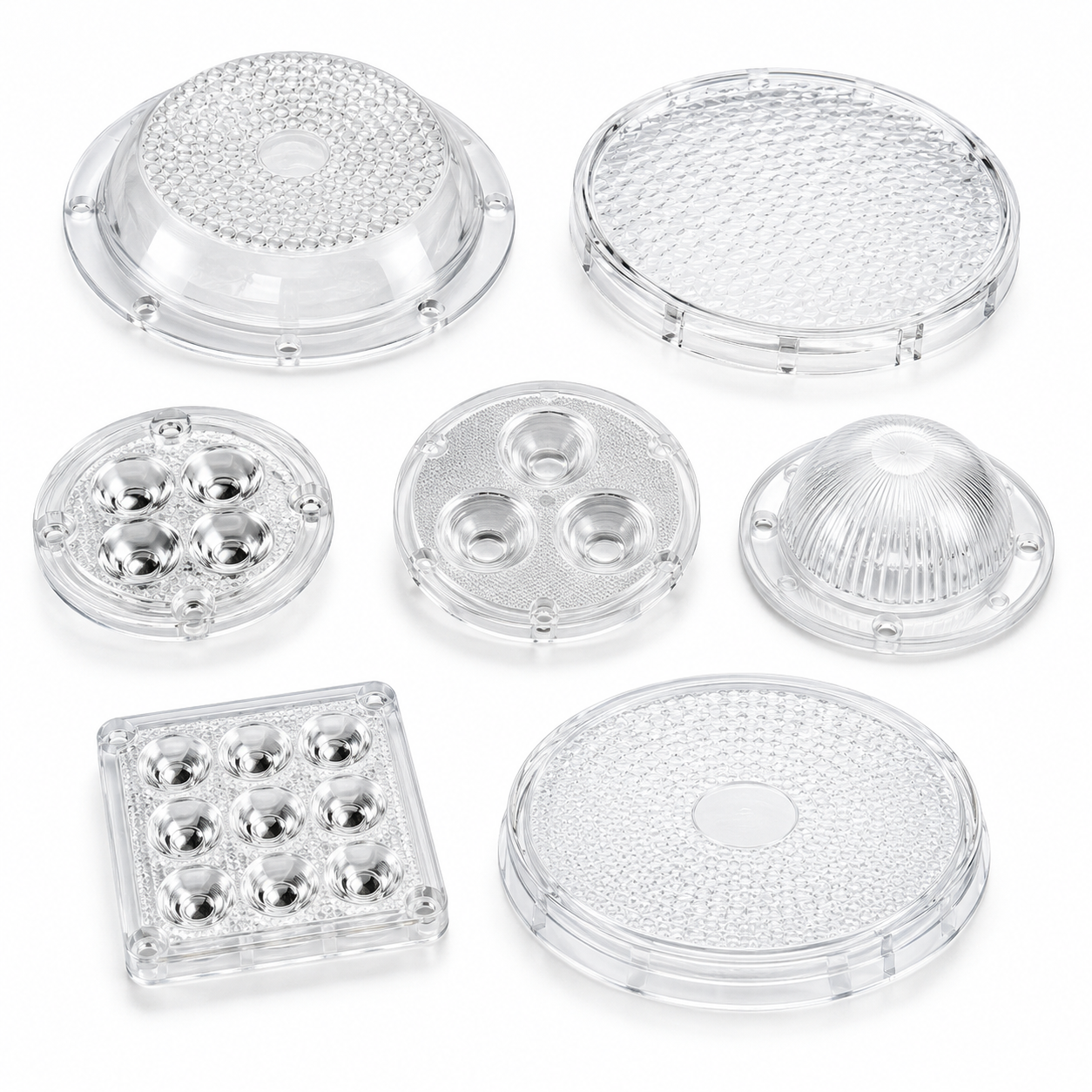
Polycarbonate is one of the most widely used engineering plastics in outdoor lighting applications.

Advantages

  • Excellent impact resistance
  • High transparency
  • Superior weather resistance
  • Good dimensional stability
  • Lightweight

Typical Applications

  • Lamp covers
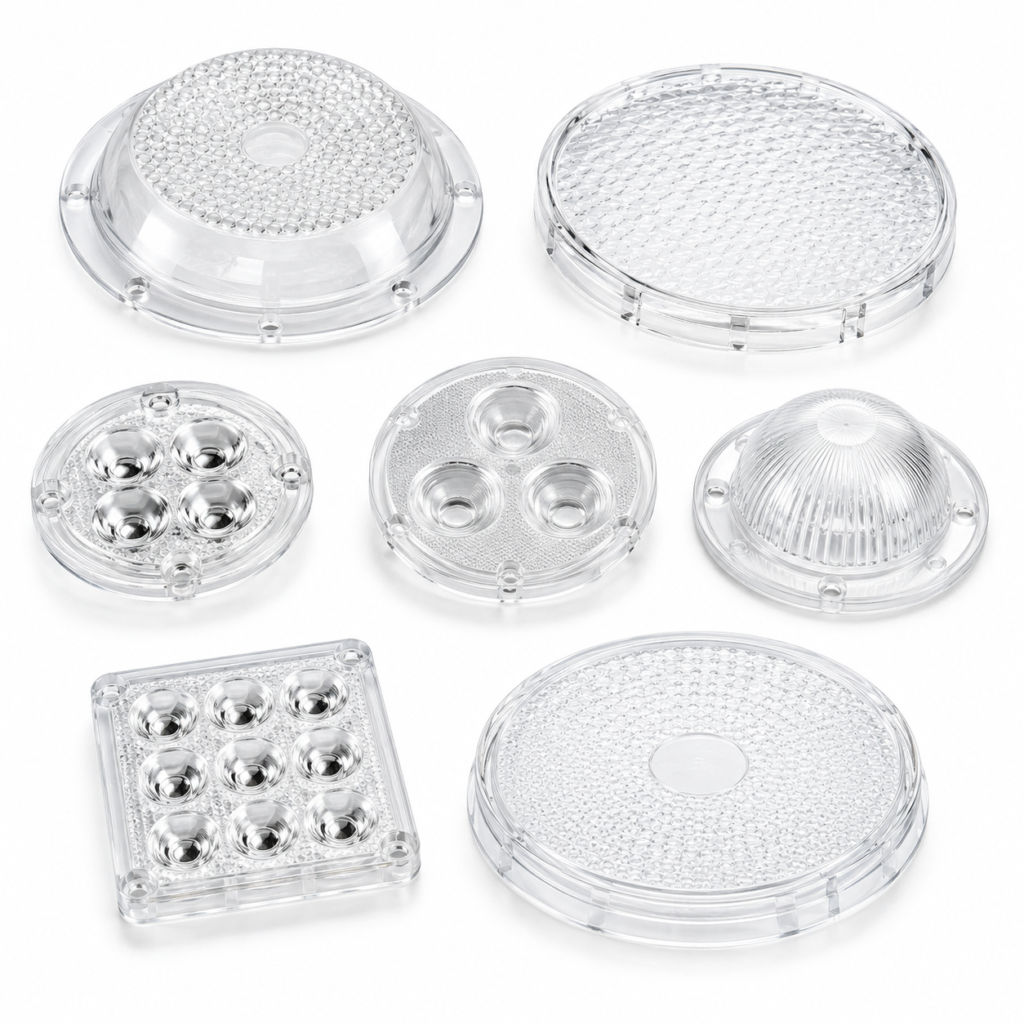
  • Lens components
  • Solar light housings
  • Floodlight protectors

Modern UV-stabilized polycarbonate grades can withstand years of outdoor exposure without significant yellowing or degradation.

Limitations

  • Higher material cost than ABS
  • Requires proper molding parameters
  • Susceptible to scratching without coating

ABS and PC+ABS Materials

ABS is commonly used for economical outdoor lighting products.

Benefits of ABS

  • Easy processing
  • Low manufacturing cost
  • Good surface finish
  • Suitable for decorative parts

However, standard ABS has limited UV resistance and may fade or become brittle over time.

Why PC+ABS is Popular

PC+ABS combines:

  • Impact strength from PC
  • Processability from ABS
  • Improved heat resistance
  • Better weather performance

This material is frequently used in:

  • Garden lighting housings
  • Solar lamp bodies
  • Decorative outdoor fixtures

https://images.openai.com/static-rsc-4/F9ZCYYPmjK6ZIyv_UVzRcDL5uaOG-XkVjXEcn3SsBVOvHw0E6jVnomJvnSIQod1VyCwFlxGLP5uiwFBm-u4cAGerB1PUpqjmI6XH9eHgn5k3EMZkYEJEudYbRplaNyVLsek9lHaMT1MVsjfSIvmU6RVjiW57Pfg_9ucsjo7oXnb4Ur_-ZNC0bVnhACPslihU?purpose=fullsize

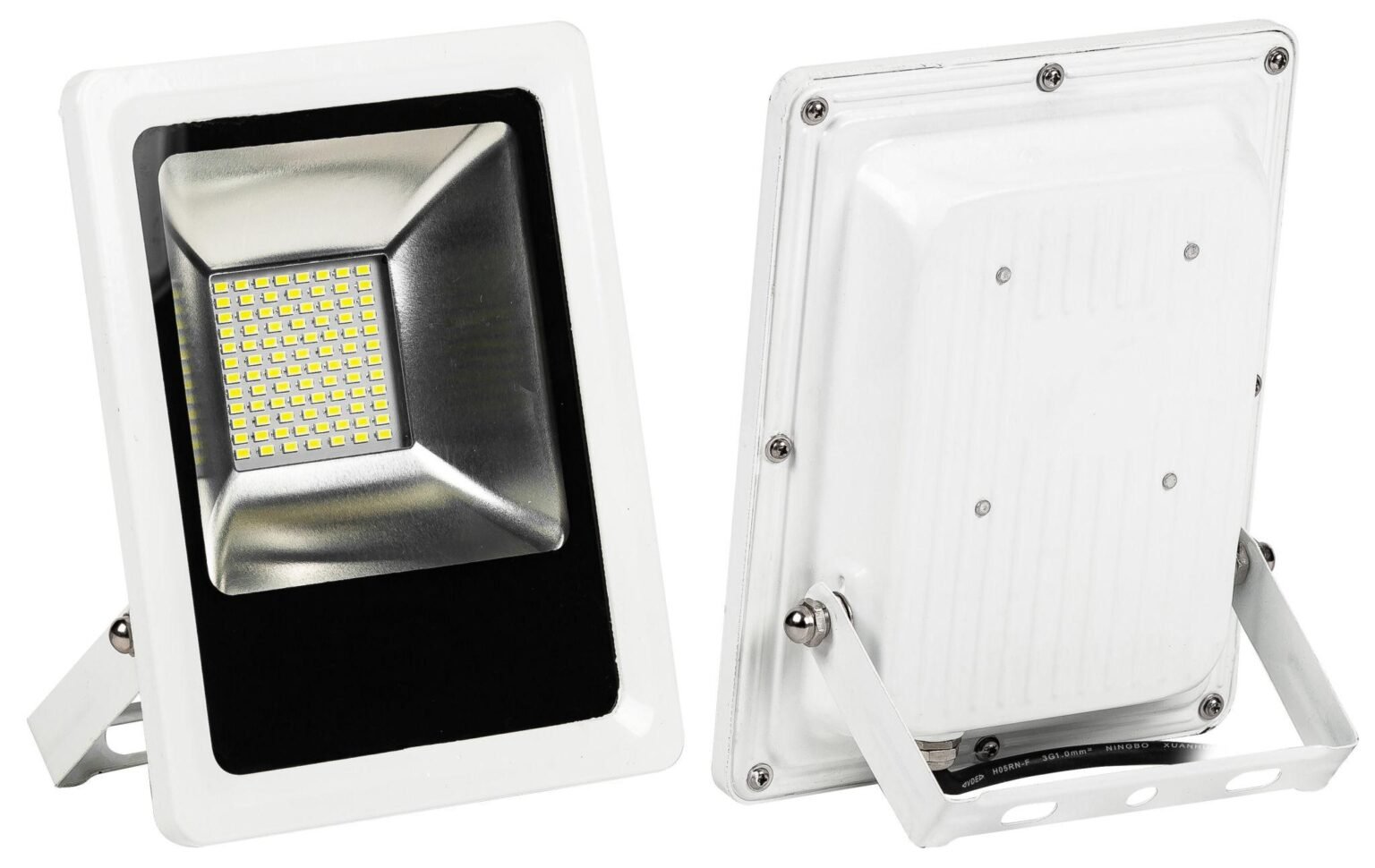
Aluminum Die Casting for Premium Outdoor Fixtures

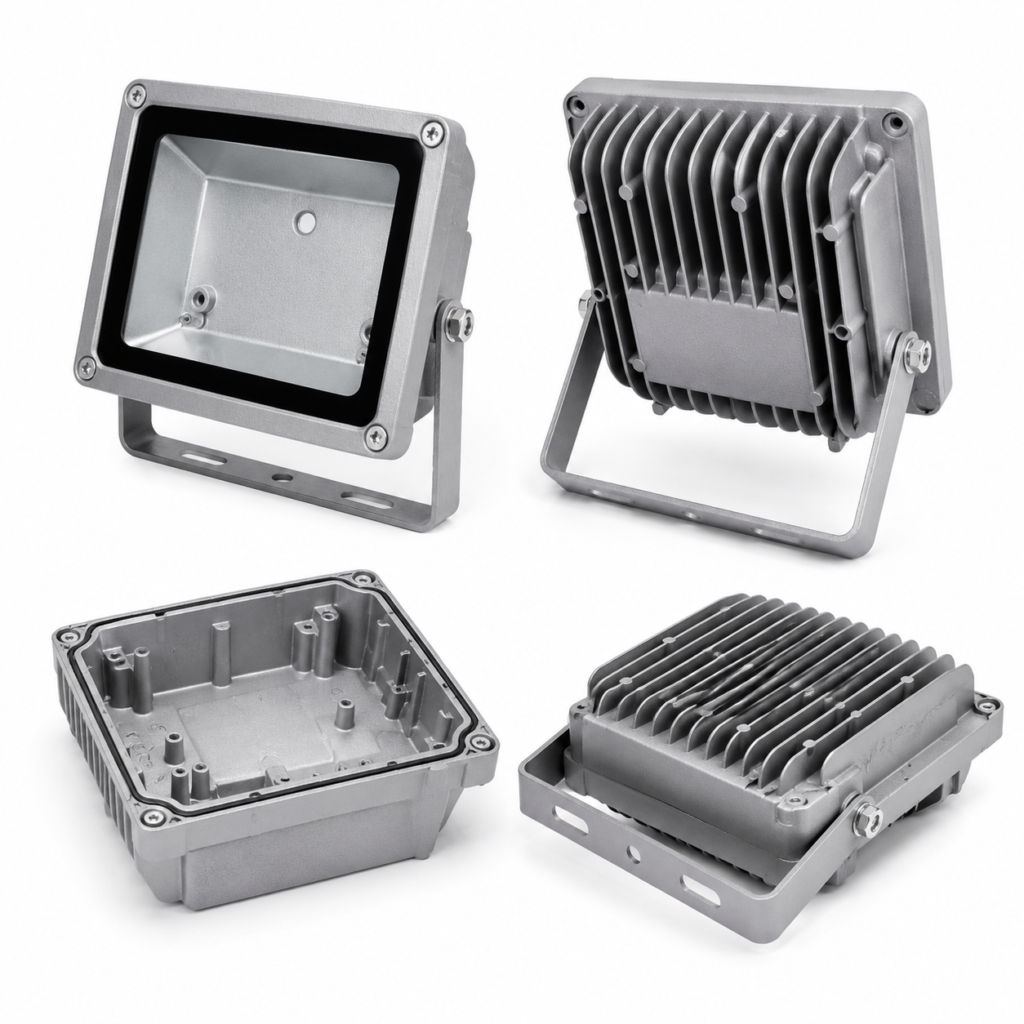
When durability and thermal performance are priorities, aluminum die casting becomes an excellent choice.

Key Properties

  • Excellent heat dissipation
  • High structural strength
  • Corrosion resistance
  • Premium appearance

Common Applications

  • LED floodlights
  • Street lights
  • High-power wall lights
  • Architectural lighting

Aluminum housings help maintain lower LED junction temperatures, improving lighting efficiency and lifespan.

Surface Treatments

  • Powder coating
  • Anodizing
  • Electrophoretic coating

These treatments further enhance corrosion resistance and aesthetic appeal.
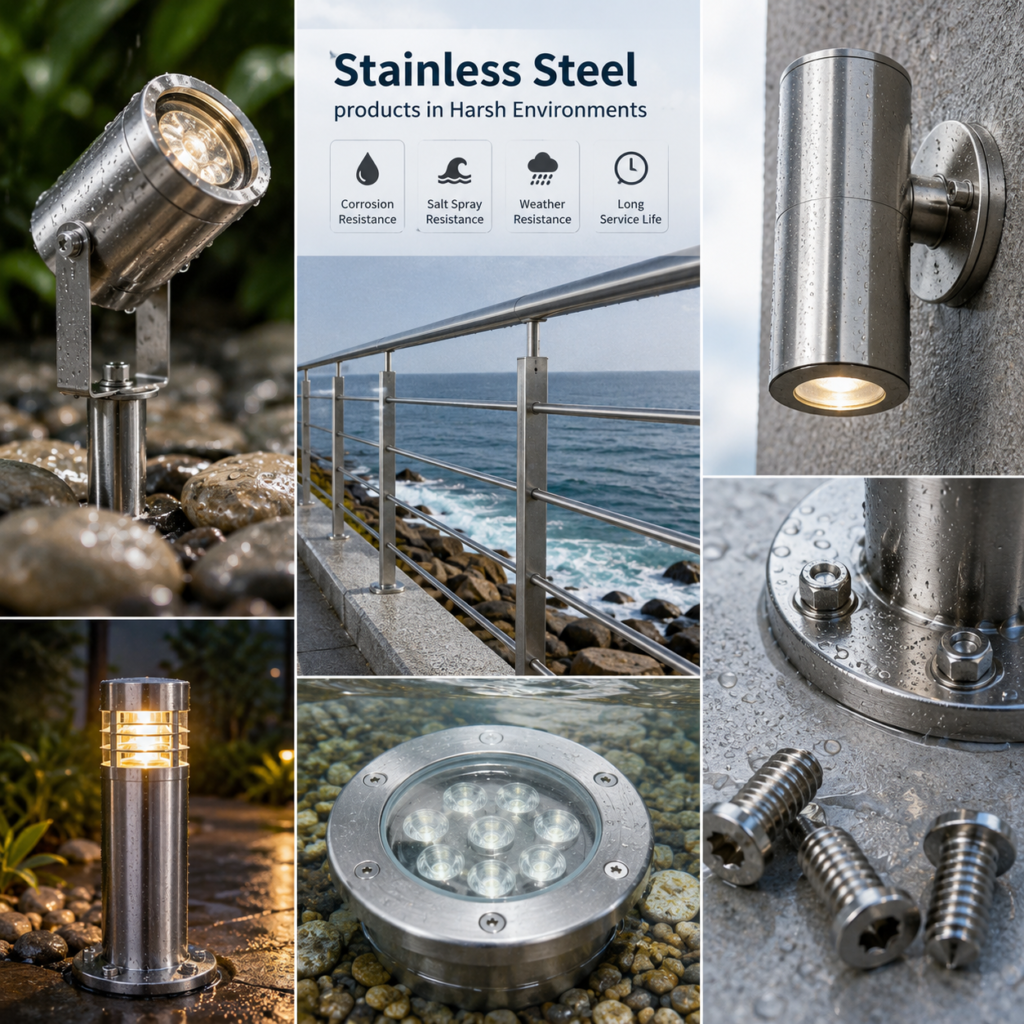
Stainless Steel in Harsh Environments

Stainless steel is commonly selected for luxury and coastal outdoor lighting applications.

Advantages

  • Exceptional corrosion resistance
  • Premium appearance
  • Long service life
  • High mechanical strength

Recommended Grades

GradeCorrosion ResistanceTypical Application
SUS304GoodGeneral outdoor lighting
SUS316ExcellentCoastal and marine environments

SUS316 contains molybdenum, which significantly improves resistance to saltwater corrosion.

Challenges

  • Higher material cost
  • Increased processing difficulty
  • Greater product weight

Despite these drawbacks, stainless steel remains a preferred option for high-end lighting products.

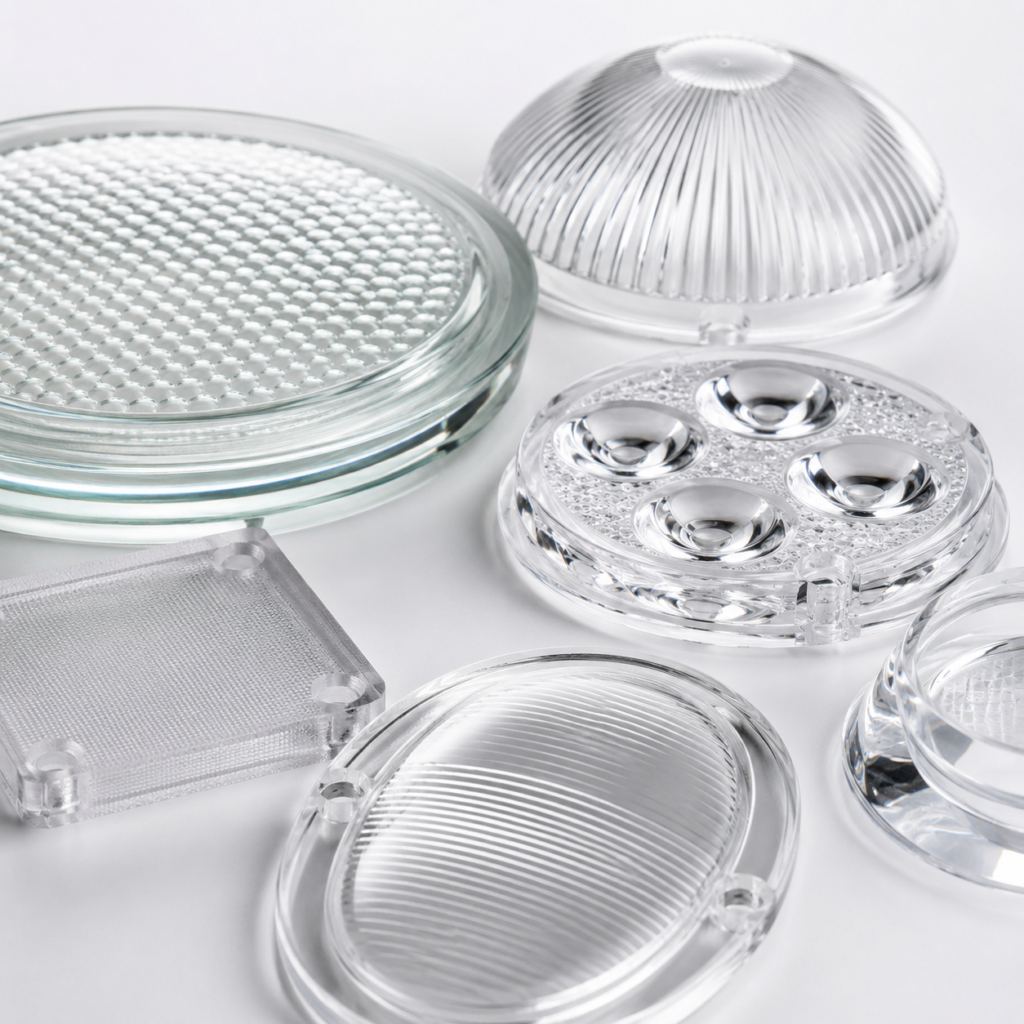
Optical Materials: Glass vs Acrylic

Light transmission components are equally important in outdoor lighting design.

Tempered Glass

Benefits:

  • Excellent transparency
  • UV stability
  • Scratch resistance
  • High temperature resistance

Applications:

  • Floodlights
  • Street lights
  • Industrial fixtures

Acrylic (PMMA)

Benefits:

  • Lightweight
  • Excellent clarity
  • UV resistance
  • Lower cost

Applications:

  • Decorative lighting
  • Garden lamps
  • Solar lights
PropertyTempered GlassAcrylic (PMMA)
TransparencyExcellentExcellent
WeightHeavyLightweight
Impact ResistanceModerateBetter
Scratch ResistanceExcellentModerate
CostHigherLower

UV Resistance and Weatherability Considerations

One of the most critical requirements for outdoor lighting materials is weather resistance.

UV degradation may cause:

  • Surface chalking
  • Discoloration
  • Cracking
  • Loss of mechanical strength

Manufacturers often improve UV performance through:

  • UV stabilizers
  • UV absorbers
  • Protective coatings
  • Weather-resistant resin grades

Products intended for tropical climates should undergo accelerated weathering tests to verify long-term durability.


Material Selection Recommendations

Different lighting products require different material combinations.

Product TypeRecommended Housing MaterialLens Material
Solar Garden LightPC+ABSPC
Flood LightAluminum Die CastingTempered Glass
Wall LightAluminum or PC+ABSPC
Landscape LightStainless SteelGlass
Pathway LightPC+ABSAcrylic
Street LightAluminum Die CastingTempered Glass

Selecting the right combination can significantly improve product reliability while controlling manufacturing costs.


Future Trends in Outdoor Lighting Materials

As sustainability becomes increasingly important, manufacturers are exploring:

  • Recycled engineering plastics
  • Bio-based polymers
  • Lightweight aluminum alloys
  • Advanced UV-resistant coatings
  • Smart composite materials

These innovations help reduce environmental impact while maintaining excellent product performance.

The demand for energy-efficient outdoor lighting systems will continue driving material development in the coming years.


Conclusion

Outdoor lighting performance depends heavily on material selection. Polycarbonate, PC+ABS, aluminum die casting, stainless steel, tempered glass, and acrylic each offer unique advantages for different applications.

When choosing materials, engineers should evaluate environmental exposure, product lifespan requirements, aesthetics, mechanical performance, and cost considerations. A well-designed material combination can significantly enhance durability, safety, and customer satisfaction.

By understanding the characteristics of each material, manufacturers can create reliable outdoor lighting products capable of delivering long-term performance in even the most demanding environments.

Name

Leave a Reply

Your email address will not be published. Required fields are marked *