PA injection molding
- Home
- / Material /
- PA injection molding
Nylon (Polyamide) Injection Moulding: Mastering the Versatile Engineering Polymer
1. Introduction: The Engineering Workhorse
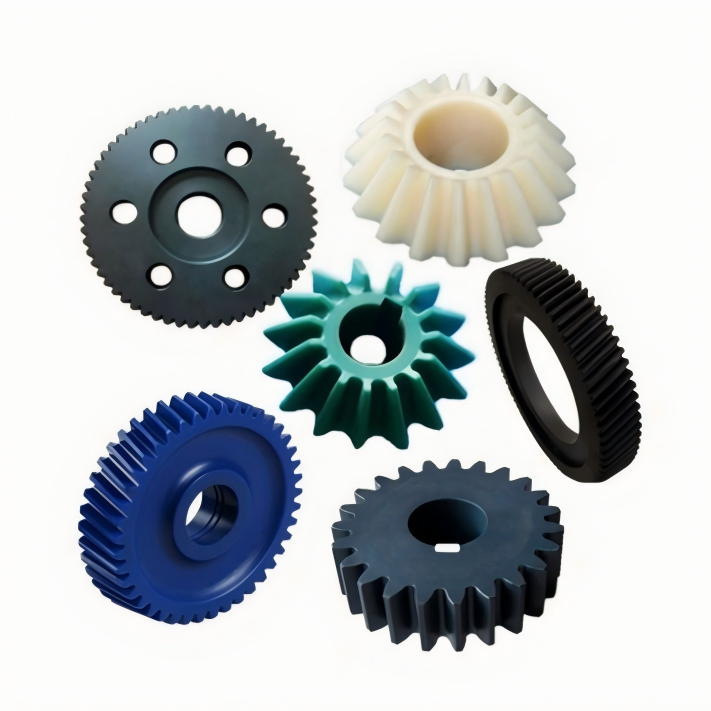
Polyamide, universally known as nylon, stands as one of the most versatile engineering thermoplastics, celebrated for its exceptional strength, wear resistance, and thermal stability. First developed by DuPont in the 1930s, nylon has evolved into a family of materials with diverse properties tailored for specific applications. As a semi-crystalline polymer, polyamide presents unique challenges and opportunities in injection moulding, requiring specialized knowledge to harness its full potential.
This comprehensive guide explores the intricate world of PA injection moulding, from its chemical structure to advanced processing techniques. We will examine why nylon remains indispensable in demanding applications ranging from automotive powertrains to industrial machinery, and how proper processing techniques can yield components with exceptional mechanical performance and dimensional stability.
2. Material Science: Understanding the Polyamide Family
Chemical Structure and Classification
Polyamides are characterized by the amide group (–NH–CO–) in their backbone, formed through condensation polymerization. The numbering system indicates the number of carbon atoms in the diamine and diacid components:
Common PA Types and Their Characteristics:
| Type | Full Name | Key Characteristics | Typical Applications |
|---|---|---|---|
| PA6 | Polyamide 6 (Caprolactam) | Good toughness, impact resistance, moderate moisture absorption | Gears, bearings, automotive components |
| PA66 | Polyamide 6,6 (Hexamethylenediamine + Adipic acid) | Higher stiffness, heat resistance, faster crystallization | Electrical connectors, automotive underhood parts |
| PA46 | Polyamide 4,6 | Exceptional heat resistance (HDT up to 290°C) | High-temperature electrical, automotive |
| PA11/PA12 | Polyamide 11/12 (from castor oil/lauryllactam) | Low moisture absorption, excellent dimensional stability | Automotive fuel lines, flexible tubing |
| PPA | Polyphthalamide | Enhanced thermal/chemical resistance | High-performance automotive, industrial |
Reinforced and Modified Grades:
Glass Fiber Reinforced: 15-50% glass fiber for enhanced stiffness and dimensional stability
Mineral Filled: Improved flatness and reduced warpage
Impact Modified: Enhanced toughness for low-temperature applications
Heat Stabilized: For continuous high-temperature exposure
Lubricated: Reduced friction for bearing applications
Physical Properties Overview:
Density: 1.12-1.15 g/cm³ (unreinforced); up to 1.6 g/cm³ (highly filled)
Melting Point: PA6: 220°C; PA66: 260°C; PA12: 178°C
Tensile Strength: 70-90 MPa (unreinforced); up to 200 MPa (glass-filled)
Moisture Absorption: 1.5-3.0% at equilibrium (PA6/66); 0.2-0.5% (PA11/12)
Heat Deflection Temperature: 60-90°C (unfilled); up to 250°C (glass-filled)
3. Material Preparation: The Critical Drying Process
The Imperative of Proper Drying
Polyamides are extremely hygroscopic, requiring meticulous drying to prevent processing issues and ensure optimal properties:
Drying Specifications by PA Type:
| PA Type | Drying Temperature | Drying Time | Target Moisture | Maximum Moisture |
|---|---|---|---|---|
| PA6 | 80-90°C | 4-6 hours | <0.1% | 0.15% |
| PA66 | 80-90°C | 4-6 hours | <0.1% | 0.15% |
| PA46 | 120°C | 4-6 hours | <0.05% | 0.10% |
| PA11/12 | 70-80°C | 3-5 hours | <0.05% | 0.10% |
| Glass-filled | 100-110°C | 6-8 hours | <0.05% | 0.08% |
Drying System Requirements:
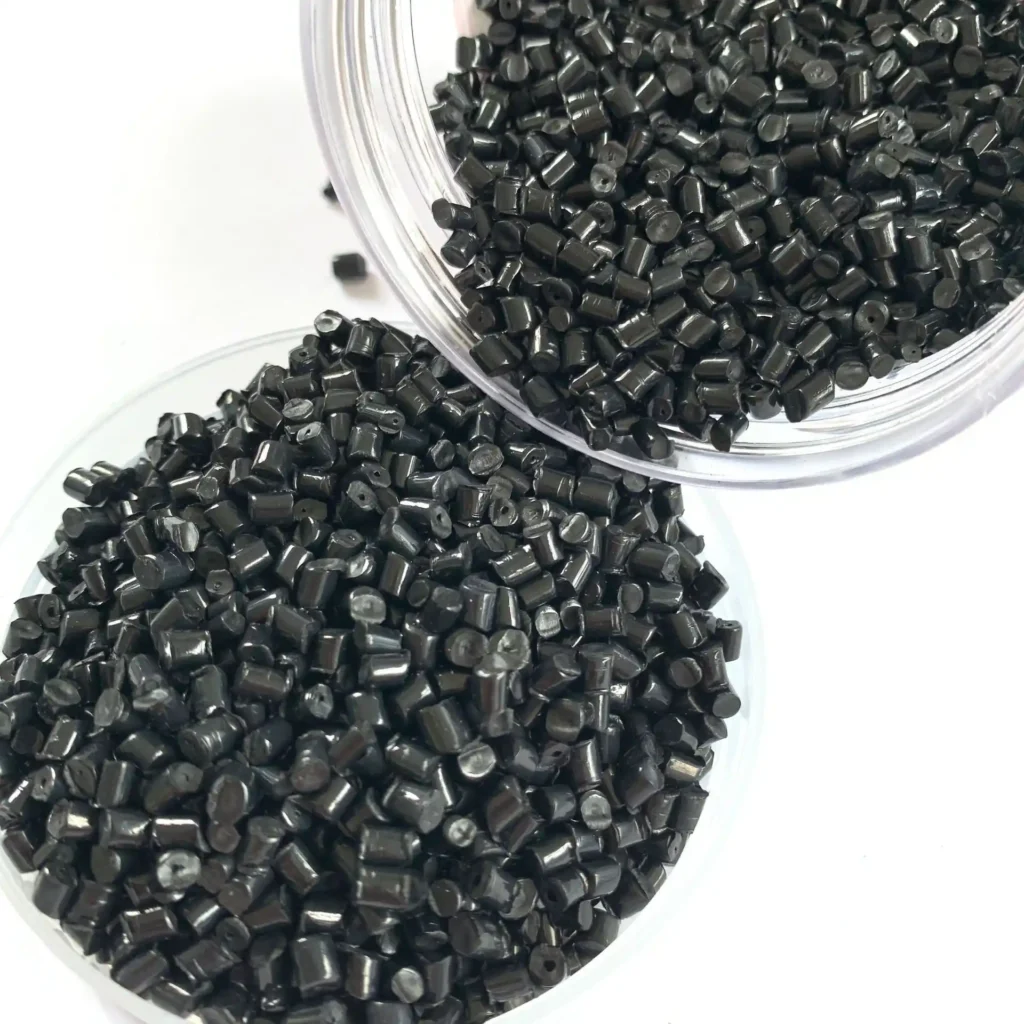
Dehumidifying Dryers: Essential for consistent results
Dew Point: -40°C or lower recommended
Hopper Design: Sealed with sufficient residence time
Regrind Drying: Often requires longer times due to increased surface area
Consequences of Improper Drying:
Hydrolytic Degradation: Water causes chain scission during processing
Surface Defects: Splay marks, silver streaks, bubbles
Mechanical Property Loss: Significant reduction in strength and toughness
Dimensional Instability: Excessive post-mould shrinkage and warpage
Poor Appearance: Dull surfaces, inconsistent gloss
Material Handling Protocol:
Storage: Sealed containers with desiccant
Exposure Time: Limit to 30 minutes maximum in humid environments
Moisture Testing: Regular verification using Karl Fischer titration
Regrind Management: Maximum 25% regrind for critical applications
4. Injection Moulding Machine Configuration
Machine Selection Criteria:
Clamping Force: 3-6 tons per square inch of projected area
Injection Capacity: 40-70% of machine maximum
Drive System: Electric or hybrid for precise control
Control System: Capable of managing complex viscosity profiles
Screw Design Requirements:
Type: Compression screw with gradual transition
L/D Ratio: 18:1 to 22:1 (shorter than for some thermoplastics)
Compression Ratio: 3.0:1 to 3.5:1 (higher for uniform melting)
Check Valve: Sliding ring type with minimal resistance
Screw Tip: Mixing elements for filled grades
Barrel and Nozzle Specifications:
Barrel Zones: Minimum 3 zones with PID control
Temperature Control: ±3°C accuracy required
Nozzle Type: Open nozzle with temperature control
Shot Size: Consistent cushion of 3-6mm recommended
Special Considerations:
Corrosion Resistance: Nickel-plated screws/barrels for some reinforced grades
Wear Protection: Hardened components for abrasive filled materials
Cleaning Protocol: Proper purging between material changes
5. Processing Parameters and Optimization
Temperature Settings by PA Type:
| PA Type | Rear Zone | Middle Zone | Front Zone | Nozzle | Melt Temp | Mould Temp |
|---|---|---|---|---|---|---|
| PA6 | 220-240°C | 240-260°C | 250-270°C | 250-270°C | 240-280°C | 60-90°C |
| PA66 | 260-280°C | 280-295°C | 290-305°C | 290-305°C | 280-310°C | 70-120°C |
| PA46 | 280-300°C | 300-320°C | 310-330°C | 310-330°C | 290-330°C | 100-140°C |
| PA11 | 190-210°C | 210-230°C | 220-240°C | 220-240°C | 200-250°C | 40-70°C |
Injection Phase Parameters:
Injection Speed: Fast to very fast (prevents premature freezing)
Injection Pressure: 800-1400 bar (higher for reinforced grades)
Switchover: 95-98% cavity fill by volume or pressure-based
Back Pressure: 5-20 bar for melt homogenization
Holding/Packing Phase:
Pressure: 40-60% of injection pressure
Time: Until gate freeze (typically 5-15 seconds)
Function: Critical for dimensional control in crystalline materials
Cooling Strategy:
Cooling Time: 20-40 seconds per mm of wall thickness
Ejection Temperature: Below 100°C for most grades
Cycle Time Optimization: Balance between cooling and crystallization
Special Processing Techniques:
Gas-Assisted Moulding: For thick sections to reduce sink marks
Sequential Moulding: For large parts to optimize filling
In-Mould Annealing: For stress relief in high-performance applications
6. Tooling Design for Polyamide Moulding
Mould Material Selection:
Production Moulds: Pre-hardened steels (P20, 4140) or hardened tool steels
Surface Hardness: 48-52 HRC for abrasion resistance
Cavity Finish: SPI B-1 to C-3 depending on application
Corrosion Protection: Nickel plating for moisture protection
Runner System Design:
Cold Runners: Full round, 6-10mm diameter minimum
Hot Runners: Externally heated with precise temperature control
Balancing: Critical for multi-cavity moulds
Gate Types:
Edge Gates: Most common, easy to trim
Diaphragm Gates: For cylindrical parts
Hot Tips: For cosmetic applications
Cooling System Design:
Channel Design: Follow part contours closely
Temperature Control: Separate circuits for cores and cavities
Uniformity: ±5°C across mould surface maximum
Baffles/Bubbler: For deep cores
Venting Requirements:
Vent Depth: 0.015-0.030mm
Vent Width: 6-10mm
Location: End of fill and weld line areas
Importance: Prevents burning and incomplete filling
Ejection System:
Ejector Pins: Larger diameter for lower surface pressure
Stripper Plates: For tubular parts
Ejection Force: Higher than for amorphous materials due to shrinkage
7. Part Design Guidelines for Polyamide
Wall Thickness Principles:
General Range: 1.0-3.0mm (optimal: 1.5-2.0mm)
Uniformity: Critical to prevent warpage (max variation: 20%)
Thick Sections: Core out to minimize shrinkage differences
Minimum Thickness: 0.5mm possible with optimized processing
Rib and Boss Design:
Rib Thickness: 40-60% of adjacent wall
Rib Height: Maximum 3 times wall thickness
Boss Design: Should be cored and connected with ribs
Draft Angles: 1-2° per side minimum
Corner Design:
Internal Radii: Minimum 0.5 times wall thickness
External Radii: Internal radius plus wall thickness
Benefits: Reduces stress concentration, improves flow
Draft Angles:
Standard Parts: 1-2° per side
Textured Surfaces: Add 1° per 0.025mm texture depth
Deep Cores: Additional 0.5° per 25mm depth
Gear and Bearing Design:
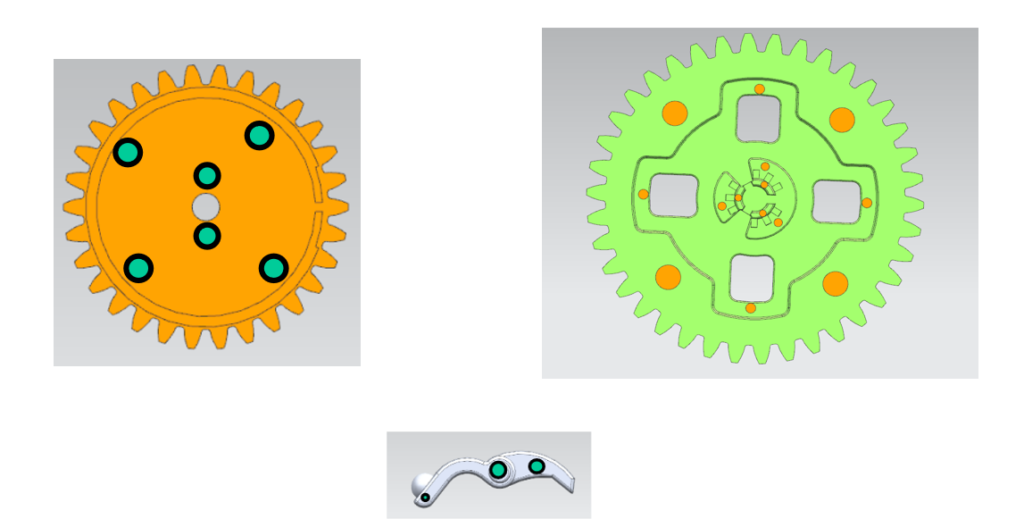
Tooth Design: Consider shrinkage in mold design
Clearances: Account for moisture absorption effects
Mounting Bosses: Design for press fits considering creep
8. Crystallinity and Its Impact on Processing
Understanding Nylon Crystallinity:
Semi-Crystalline Nature: 20-40% crystalline regions typically
Crystallization Rate: PA66 > PA6 > PA12
Factors Affecting Crystallinity: Cooling rate, nucleation, molecular weight
Processing Effects on Crystallinity:
Mould Temperature: Higher temperatures promote higher crystallinity
Cooling Rate: Slow cooling increases crystallinity
Nucleating Agents: Increase crystallization rate and uniformity
Property Implications:
Higher Crystallinity: Increased strength, stiffness, chemical resistance
Lower Crystallinity: Improved toughness, transparency, dimensional stability
Dimensional Effects: Crystalline shrinkage (1.5-2.5%) vs. amorphous shrinkage (0.5-1.0%)
Controlling Crystallization:
Mould Temperature Control: Precise control for consistent properties
Annealing: Post-mould heat treatment to increase crystallinity
Nucleated Grades: For faster cycles and improved properties
9. Moisture Management: Before and After Moulding
Post-Mould Conditioning:
Purpose: Achieve equilibrium moisture content for dimensional stability
Methods:
Water Immersion: 60-70°C water for several hours
Steam Conditioning: Faster but requires careful control
Humidity Chamber: Controlled environment (50% RH, 23°C)
Conditioning Times: 24-48 hours typically for PA6/66
Dimensional Changes with Moisture:
PA6/66: Expand 0.2-0.3% per 1% moisture gain
PA11/12: Expand 0.1-0.15% per 1% moisture gain
Design Consideration: Allow for moisture expansion in assemblies
Conditioning Protocols by Application:
| Application | Conditioning Method | Target Moisture | Key Benefits |
|---|---|---|---|
| Precision Gears | Hot water immersion | 2.0-2.5% | Dimensional stability, toughness |
| Electrical Parts | Humidity chamber | 1.0-1.5% | Stable electrical properties |
| Structural | Controlled environment | Equilibrium | Consistent mechanical properties |
| Dry Applications | Minimal conditioning | <0.5% | Maximum stiffness |
10. Troubleshooting Common Nylon Defects
| Defect | Root Causes | Corrective Actions |
|---|---|---|
| Splay/Silver Streaks | Moisture contamination, overheating | Verify drying (<0.1%), reduce melt temperature |
| Weld Lines | Low melt temperature, slow injection | Increase temperature 10-20°C, increase injection speed |
| Sink Marks | Insufficient packing, thick sections | Increase holding pressure/time, redesign thick areas |
| Warpage | Non-uniform cooling, differential shrinkage | Improve cooling uniformity, adjust gate location |
| Brittleness | Over-drying, excessive moisture, degradation | Optimize drying conditions, check material freshness |
| Flash | Excessive injection pressure, worn tooling | Reduce pressure, repair tool, increase clamp force |
| Dimensional Variation | Inconsistent moisture content, process variation | Standardize conditioning, implement SPC |
| Poor Surface Finish | Low mould temperature, contaminated material | Increase mould temperature, clean material handling |
Material-Specific Issues:
Degradation: Yellowing and property loss from overheating
Crystallinity Variation: Inconsistent properties from uneven cooling
Moisture Sensitivity: Property changes with environmental exposure
11. Advanced Processing Techniques
Multi-Material Moulding:
Nylon/TPE Combinations: For seals and gaskets
Nylon/Nylon Combinations: Different colors or properties
Overmoulding: For enhanced functionality
Gas-Assisted Injection Moulding:
Benefits: Weight reduction, reduced sink marks
Applications: Handles, panels, thick-section parts
Challenges: Consistent channel formation
In-Mould Assembly:
Integrated Hinges: Using nylon’s flexibility
Snap-fits: Designed for in-mould engagement
Benefits: Reduced assembly operations
Microcellular Foam Moulding:
Benefits: Weight reduction, reduced warpage
Applications: Large panels, structural parts
Considerations: Surface quality, strength reduction
High-Speed Moulding for Thin Walls:
Applications: Electrical connectors, consumer electronics
Requirements: Fast injection, precise temperature control
Benefits: Reduced cycle times
12. Quality Control and Testing
Process Monitoring:
Key Parameters: Melt temperature, moisture content, cushion consistency
Statistical Process Control: For dimensional and weight consistency
Real-time Monitoring: Pressure and temperature sensors
Material Testing:
Moisture Analysis: Karl Fischer titration for accurate measurement
Rheological: Melt Flow Rate (ASTM D1238)
Mechanical:
Tensile (ASTM D638)
Impact (ASTM D256)
Flexural (ASTM D790)
Thermal:
DSC for melting point and crystallinity
TGA for thermal stability
HDT (ASTM D648)
Dimensional: Shrinkage measurement under controlled conditions
Part Validation:
Dimensional: CMM measurement at controlled humidity
Performance: Functional testing under application conditions
Environmental: Heat aging, chemical resistance, humidity cycling
Long-term: Creep and fatigue testing for critical applications
13. Industry Applications and Case Studies
Automotive Industry:
Underhood Components: Intake manifolds, engine covers, cooling parts
Powertrain: Gears, bearings, bushings
Fuel Systems: Lines, connectors, housings
Benefits: Weight reduction, chemical resistance, heat stability
Electrical and Electronics:
Connectors: Miniaturized components with high pin counts
Circuit Breakers: Arc resistance and thermal stability
Enclosures: Flame retardant grades for safety
Consumer Products:
Power Tools: Housings and gears
Sporting Goods: Strength and fatigue resistance
Apparel: Fibers and mechanical components
Industrial Applications:
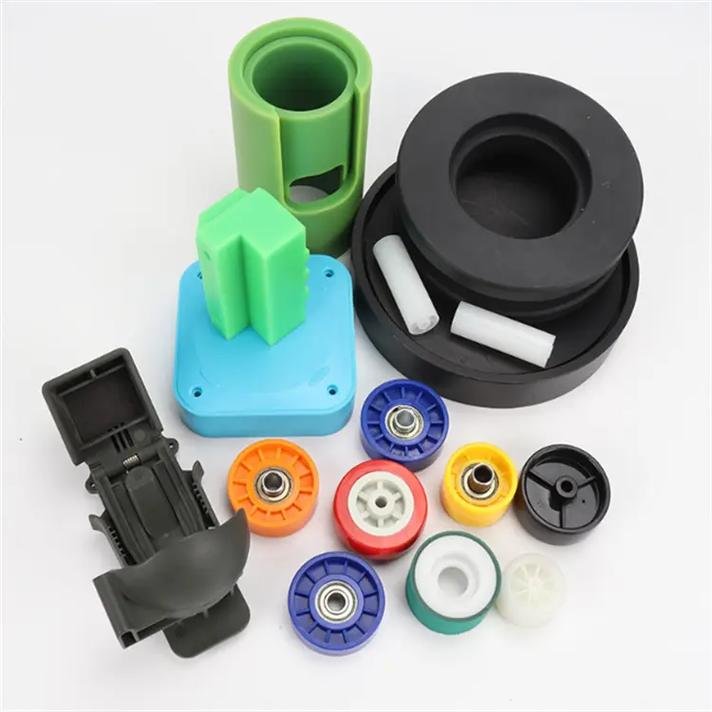
Gears and Bearings: Wear resistance and self-lubrication
Pumps and Valves: Chemical resistance
Conveyor Components: Strength and durability
Medical Applications:
Surgical Instruments: Autoclavable grades
Dental Devices: Precision and biocompatibility
Equipment Housings: Cleanability and durability
14. Sustainability and Future Directions
Recycling Technologies:
Mechanical Recycling: Limited by property degradation
Chemical Recycling:
Hydrolysis: Back to monomers
Ammonolysis: Alternative depolymerization
Pyrolysis: For chemical feedstocks
Closed-Loop Systems: Developing for automotive and textile applications
Bio-based Nylons:
PA11: From castor oil (100% bio-based)
PA610: Partially bio-based (sebacic acid from castor oil)
PA410: High bio-content with good properties
Performance: Comparable to petroleum-based nylons
Energy Efficiency:
All-Electric Machines: Precise control for energy savings
Process Optimization: Reduced cycle times through simulation
Heat Recovery: From cooling systems
Emerging Technologies:
Nanocomposites: Enhanced properties with nano-fillers
Self-reinforcing Nylons: In-situ polymerization for superior properties
Smart Nylons: Integrated sensors or functional properties
15. Conclusion: Mastering the Nylon Challenge
Polyamide injection moulding represents a sophisticated balance of material science, process engineering, and practical experience. Its successful processing demands respect for the material’s unique characteristics—particularly its hygroscopic nature and crystalline behavior—combined with meticulous attention to every aspect of the manufacturing process.
The future of nylon lies in developing more sustainable versions while maintaining or enhancing its exceptional performance characteristics. Advances in bio-based nylons, improved recycling technologies, and energy-efficient processing will ensure nylon remains relevant in an increasingly environmentally conscious market.
For manufacturers, success with nylon requires:
Deep Material Understanding: Knowledge of different PA types and their behaviors
Precise Process Control: Consistent execution of optimized parameters
Robust Quality Systems: Monitoring and controlling key variables
Application Knowledge: Understanding end-use conditions and requirements
As applications become more demanding—whether in higher temperatures, greater mechanical loads, or stricter environmental requirements—nylon injection moulding professionals must continue to innovate and refine their techniques to meet these challenges.